Roma in Bulgaria. Is it worth buying property next to Roma neighbours
06 Oct 2020
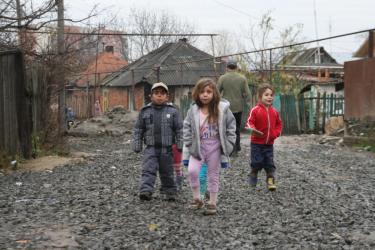 There are around 8–10 million Roma in Europe. The majority live in Central and Eastern Europe. The countries with the largest Roma populations are Romania, Bulgaria, Hungary, the USA, Serbia and Slovakia.
When buying property in Bulgaria, many people are concerned about who their neighbours will be. It so happens that in a number of countries a stereotype has developed that living next to certain peoples, for example the Roma, may not be very pleasant and should be avoided. Stereotypes do not always match reality, and every buyer of a flat or a house chooses for themselves the place they like to live in.
What are buyers’ fears connected with? When purchasing property in Bulgaria, a person acquires a new home. Even if the purpose of the purchase is to let it out or to stay there briefly in the summer, the home has to be safe. Owners want to be sure that no one will encroach upon their property or try to take away their phone or wallet.
The greatest fears are caused by the presence of the Roma. It has developed over the centuries that many people are wary of the representatives of this nation with a rich culture, accustomed to living according to their own traditions. It is believed that they are more prone than other peoples to theft, aggression and robbery. That is why buying property in areas where a large number of Roma live is not recommended.
The Roma in Bulgarian villages
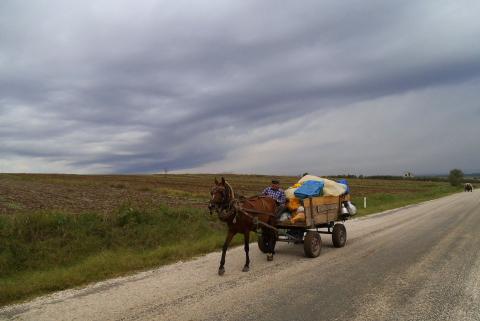
 Many people want to have their own house. The Gypsies, or as they are sometimes called, the Roma, are no exception. A cottage with a garden and a vegetable plot makes it possible to live with the whole family in one place, to grow vegetables and fruit, and to keep livestock. The tradition of living close to one’s relatives has been characteristic of the Roma people since ancient times. That is why in the villages and small towns of Bulgaria separate quarters populated by them are formed. In another part of such a settlement, Bulgarians, Russians, Germans and Britons usually buy property.
In many villages of the Burgas region that are popular among foreign buyers, there is almost no Roma population. These are Lyka, Kamenar, Aleksandrovo, Kosharitsa, Debelt and Polski Izvor. In the popular village of Marinka, located 2 km from the sea near Burgas, there is a small Roma quarter, but they live in harmony with the rest of the population, and no conflicts arise. That the Roma live in the Black Sea resorts of Ravda, Varvara and Sinemorets is something that tourists and even local residents learn with surprise. They experience no discomfort at all from such neighbours.
In the Varna region we recommend property buyers to take a closer look at Asparuhovo, Zvezditsa, Aleksandrovo and Preseltsi. The village of Osenovo is interesting. It is inhabited by Bulgarians, Turks and foreigners who have come to Bulgaria on a residence permit or permanent residence. The little village has a wonderful location – 3 km from Golden Sands and 7 km from Albena. The village of Kranevo is situated directly on the coast, and there are also no Roma there.
Roma neighbourhoods in the cities of Bulgaria
Almost every city in Bulgaria has a quarter (mahala) inhabited by Roma.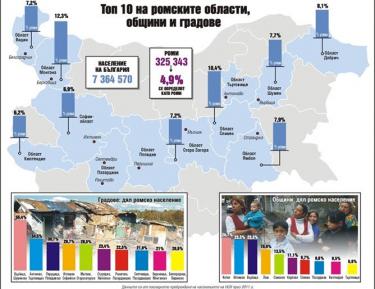
Cities and regions in Bulgaria with a high percentage of Roma among the population:
- the town of Kotel (near Sliven), where every fourth local is Roma
- the town of Varbitsa, Shumen region – 55.4% Roma.
- Antonovo, Perushtitsa – 1/3 Roma.
- In the towns of Straldzha, Rakitovo, Septemvri, Berkovitsa and Belogradchik – every fifth resident.
First place among the Bulgarian regions with the largest number of Roma is held by the Plovdiv region. The largest ghetto is Stolipinovo in Plovdiv, where tens of thousands of Roma live.
In the regions of Yambol, Shumen, Pazardzhik, Stara Zagora and Vidin, 7% of the population are Roma.
Roma quarters in Bulgaria in the major cities are: Fakulteta (Sofia), Maksuda (Varna), Meden Rudnik and Pobeda (Burgas).
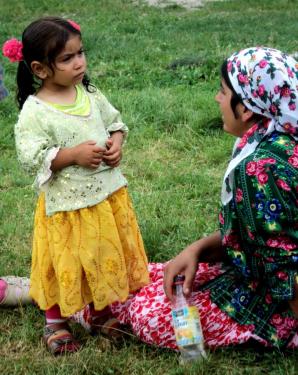 Across the whole of Bulgaria, 347 Roma mahalas and quarters have been registered.
If we speak of the coastal towns of the Burgas region, most Roma live in Ahtopol and Tsarevo. In the well-known resort towns of Sozopol, Pomorie and Nessebar there are almost none.
In Burgas itself there is an entire Roma quarter – Pobeda, popularly known as Kumluka. Housing here is inexpensive and is in low demand.
There are many Roma in Meden Rudnik and Gorno Ezerovo. They live here locally, forming their own district and not really interacting with the other residents.
In every mahala there are kindergartens and schools. The city authorities carry out a great deal of work on the socialisation of children and help them to receive an education. Jobs are provided for the adults.
In Varna the Roma quarter is Maksuda. It is interesting that the local residents identify themselves with the Turkish Roma; their native language is Turkish. They are also present in Vladislavovo.
Approximately 8% of the population of Balchik are Roma. There are practically none in Albena, Dolni Chiflik or Byala.
Buyers of property in Bulgaria usually stipulate that there should be no Roma population near their new home. Our agency knows all the demographic and geographical nuances of Bulgaria and will select a home for you in line with all your requirements.
Read also “The Roma in Bulgaria. The influence of the Roma on Bulgarian culture and art”.
Subscribe to real estate market news
Get weekly analytics and current offers.