Gypsies in Bulgaria. The influence of Roma on Bulgarian culture and art

07 Oct 2020
 The word “gypsies” is as old as the world. Today it is used by the French, Russians, Portuguese, Dutch, Germans, Hungarians, Italians, Poles, Serbs and many other peoples. At the same time, all the organisations in Bulgaria dealing with the problems of the gypsies call themselves “Roma”, at the University of Veliko Tarnovo they have even created a speciality called “Romani studies” (a new word), and there is the possibility of studying “the Romani language”.
The gypsies settled in Bulgaria during the Turkish slavery and became an integral part of Bulgarian society. In every country in which they settle, they contribute to the local culture, musical compositions and lyric poems are dedicated to them, and gypsies become the heroes of films. Carmen from Bizet’s opera is a gypsy. Johann Strauss wrote an entire opera, “The Gypsy Baron”. In Russia, Pushkin wrote the famous poem “The Gypsies”. Russian gypsy romances are well known. The beautiful Russian song “Smuglyanka” goes: “Once in summer at dawn I looked into the neighbouring garden. There a gypsy Moldavian girl was gathering grapes”.
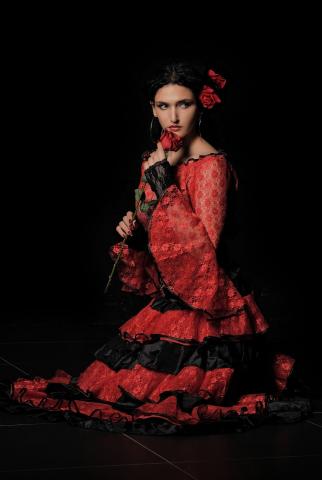
The Spaniards, like the Russians, love their gypsies, who are considered the founders of the famous Spanish national dance — flamenco.
In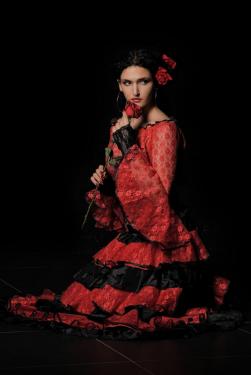 Spain, the great poet Lorca wrote one of his most beautiful poems, “The Unfaithful Wife”, about a love affair between a young gypsy man and a gypsy woman.
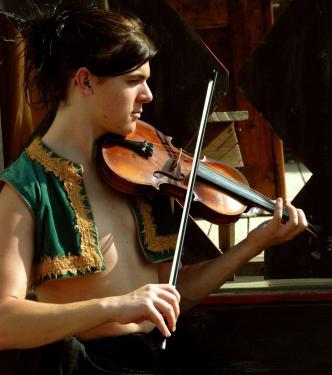
Gypsies are a musical people, and one of their favourite instruments is the violin. The greatest Hungarian poet, Sandor Petofi, in “Along the Village Walls”, describes the torments of a lover: “Along the village walls / with gypsy violinists / I will wander, I will sway / with a bottle in my hand!”
Gypsy life is also the plot of feature films in many countries. In 1967, the Serbian director Aleksandar Petrovic created “I Even Met Happy Gypsies”, and in 1998 Emir Kusturica directed “Time of the Gypsies”. In 1975, in the Soviet Union, the Moldavian director Emil Loteanu made the film “Queen of the Gypsies” (Russian title: “The Camp Goes to Heaven”), about the tragic love of two young gypsies, the horse-thief Loiko and the beautiful Rada, which won international awards at festivals in Prague, Belgrade and Paris. Bulgaria did not remain aside — in 1996, the Bulgarian director Georgi Dyulgerov made the film “Black Swallow”, which received an award at the “Golden Rose” festival in Varna, telling the story of love between a young gypsy couple.
The Bulgarian gypsy is widely referenced in Bulgarian folklore. A folk song from the Samokov region is called “A Gypsy Steals the Beautiful Dana”. The song is at once amusing and touching. A young gypsy stole the beautiful Dana and took her to his village, where her face was blackened, “she was held for three days over the smoke, so that she could become a black gypsy woman”. Dana bore him a child, but one day she ran away, returned to her village; her mother did not recognise her at first, and then “took three soaps and washed, and washed, until she became a white Bulgarian girl”. But Dana could not bear it, and after a few days she returned to the gypsy village and saw that her child was crying, and she asked the gypsies why he was crying, and they answered: “By God, white Bulgarian woman, it has been three days and three nights since the mother went to fetch gifts, and there are no gifts”.
The gypsy motif is also present in modern Bulgarian literature. Yordan Yovkov, in “Legends of Stara Planina”, tells of the unhappy love of the beautiful gypsy woman Bozhura, who fell in love with the Bulgarian Vasilcho and took her own life after his death. In his story “Starling”, Elin Pelin describes the great and tragic love between a gypsy gusla-player nicknamed “Starling” and the young gypsy woman Zuza.
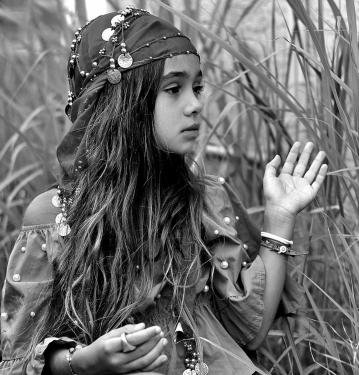 In 1981, the writer Banko Bankov published the novel “Gypsy Summer”, and in 2009 Pencho Kovachev released the collection of stories “Gypsy Happiness”. The Bulgarian poets Alexander Muratov in “The Vit Region”, Ivan Davidkov in “Gypsy Rug” and Ivan Rudnikov in “Landscape” describe the life of Bulgarian gypsies.
Bulgarian gypsies are also musical, like the Russians, Spaniards and others. Elisaveta Bagryana writes in “Radio”: “Play me a violin in the night, / sing in the gypsy way!”
 Gypsy motifs are present in the works of the poets Vladi Lyubenov and Ivaylo Dimanov, who in “Repentance” compare autumn as follows: “Autumn looks at me mockingly and passes on, / autumn is a dark-skinned beauty with black hair... / Take me from here, my young gypsy girl, take me away from here and save my sinful soul”.
Wonderful verses, but try to describe beautiful autumn as gypsy, and a girl as “my young gypsy girl”! Or to change the romantic image in Greta Gancheva’s song “Balalaika”: “An old gypsy woman smokes her pipe / and remembers her youth” into the repulsive “An old woman smokes a pipe”?
In Bulgaria there is a gypsy poet who worked in the past — Usin Kerim, and in one of his poems he writes: ... “I am a gypsy. But I have no knife in my pocket, and I did not chase a horse in order to steal from you!”
The Bulgarian gypsy virtuoso violinist is Ventsi Takev, the Eurovision participant Sofi Marinova, the folk singer Bonnie; we have Serafim Todorov, one of the greatest Bulgarian boxers of all time, with 3 championship titles and 3 titles in Europe, and the Olympic boxing champion Boris Georgiev. There is even a gay singer with an excellent voice — Azis.
Bulgarian gypsies are Bulgarians of gypsy nationality, part of the Bulgarian people. They have left a significant mark on the history, way of life and culture of Bulgaria.
Read also “Gypsies in Bulgaria. Is it worth buying housing next door to gypsies”.
Subscribe to real estate market news
Get weekly analytics and current offers.