

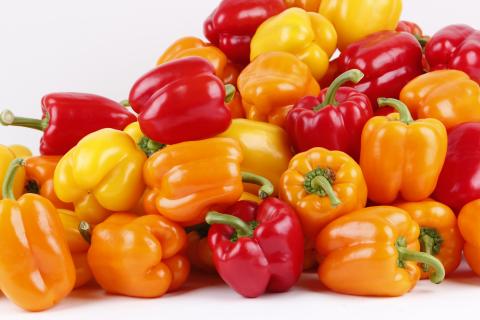
Sweet pepper is the calling card of Bulgaria. Here, under the bright sun and blue sky, peppers are grown with special love. Tasty, fragrant fruits serve as the basis for many dishes. They contain many vitamins and useful substances that prevent the development of vitamin deficiency, depression, cancer, and Alzheimer's disease.
But peppers are at their best when you have grown them yourself, on your own plot in Bulgaria, purchased with the help of the Bulgaria Avenue real estate agency.
History
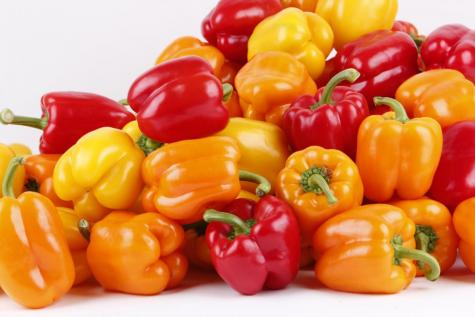 The homeland of the pepper is considered to be Central and South America. In the 15th century, seeds reached the Mediterranean countries of Europe on sailors' ships, and from there, in the 16th century, they were brought to Bulgaria through Turkey and Hungary. Here the plant took root wonderfully and, thanks to the climate and fertile soils, quickly turned into one of the most important agricultural crops. Gradually, many varieties were bred, and selective breeding continues to this day. As a result, scientists say that today's fruits have little in common with the original plant.
Curiously, the name «Bulgarian pepper» is used only in Russia and the countries of the former USSR. For everyone else, it is sweet pepper, or hot pepper if we are talking about spicy, pungent varieties.
In Bulgaria itself, there are several names for the fruits of this plant: piperki, piper and chushki. A philological argument about which word is correct can go on forever. It is believed that the name «chushki» comes from the Old Bulgarian «chusha» or «cheshouia», which means «pod». Not only pepper was called this, but also beans and peas. It would seem then that it would be better to say «piper», but on closer examination it turns out that this word refers to the fruits from which the seasoning is made — black pepper, which has nothing to do with the sweet plant. And therefore, so as not to torment themselves with pointless arguments, the Bulgarians use all of the above names.
Types of pepper in Bulgaria
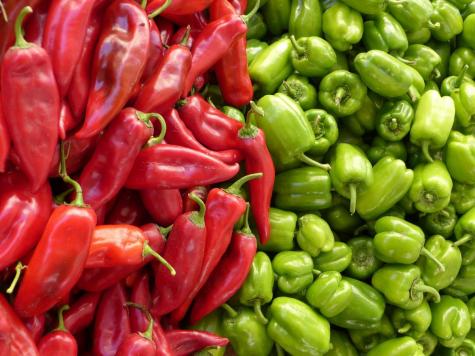 Once you have visited a market in Bulgaria, you will never forget the richness of the choice of peppers. The bright colours and aromas will make your head spin. The counters of markets, shops, and street vendors are bursting with yellow, red, and green fruits. There are thin ones, fleshy ones, long ones, rounded ones. And nearby, small hot peppers languish.
Nowadays in Bulgaria you will find a huge number of varieties. Some are ideal for preserving, others for salads and main courses.
The most popular:
- Kapiya — fleshy fruits of red, green and even orange colour. They are used for preserving, baking, stuffing, and frying. It is this variety that has been chosen for preparing the traditional Bulgarian appetiser lyutenitsa. The fruits appear on sale in late summer and autumn.
- Hiber (Bulg. — hebar) — one of the earliest varieties. The fruits range from light green to red.
- Byal kalinkov — another early variety. The peppers of this variety are three-sided and have a colour ranging from white to yellow-waxy.
- Sivriya is ideal for salads and eating fresh. The peppers are soft, crunchy, with thin skin. They appear in late spring and summer.
- Kambi ripen in autumn. Their distinguishing features are a round shape, small size, and bright red colour. They are used only for preserving.
Among the hot peppers, the common varieties are Ribki (little fish), Shipka (byala and dzhulyunska), Chorbadzhiyski (robber's).
Bulgarian traditional pepper dishes
 Having bought an apartment or a house in Bulgaria, after 2–3 years of living here you will certainly go to the shop for a chushkopek. This is the name of a device for roasting peppers. Every year at the end of summer and the beginning of autumn, the country is filled with the aromas of roasted peppers. They are roasted in villages, large and small towns, and at the resorts.
People buy or collect several kilograms of fruit, choose a day and devote it to preserves.
Here is what is made in Bulgaria from roasted sweet peppers:
- Appetisers. The peppers are peeled, passed through a meat grinder together with fresh tomatoes, aubergines, onions, garlic and salt, and lyutenitsa is prepared. If you mix peppers with roasted aubergines, garlic, black pepper, salt and vegetable oil, you get ajvar. Sometimes brined cheese (brynza) is added to it. Such sauces are spread on bread and added to various dishes.
- Pickled peppers. The roasted and peeled fruits are placed in jars, tomatoes, garlic, onions and other vegetables are added as desired, and marinade is poured over them. Try dropping in on some house in a Bulgarian village and look at the cellar. You will be struck by the huge number of shelves, which are simply bursting with jars of pickled vegetables. In winter, they are eaten as a salad, as an appetiser, and added to soups. If we are talking about hot peppers, they serve as an excellent addition to bean dishes.
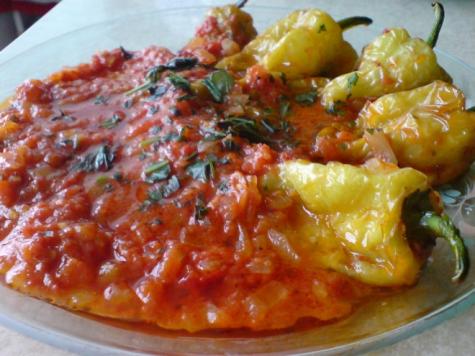
- Main courses. An example is imambayaldu. The name is Turkish, but the dish is very popular in Bulgaria. To prepare it, peppers, tomatoes and aubergines are roasted, and fresh garlic is added. Another favourite recipe is chushka byurek. The roasted fruits are stuffed with brined cheese, rolled in breading and fried.
However, dishes from fresh and fried fruits are no less popular.
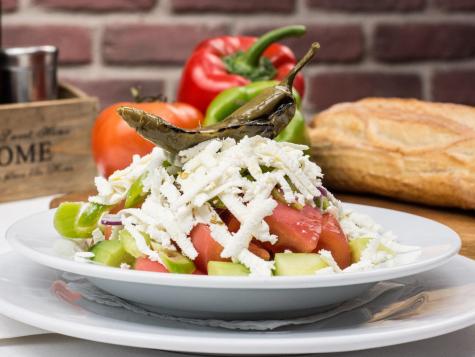 Recipes with fresh pepper:
- Salads. The most popular dish is shopska salad. It is prepared from peppers, fresh cucumbers, tomatoes, brined cheese and onion. It is possible to prepare salads with tomatoes, brined cheese, parsley and vegetable oil. A recipe with cucumbers, tomatoes, green onions, mayonnaise or sour milk is also known.
- Stuffed. In Bulgaria, you can often see people preparing fresh pepper stuffed with brined cheese for lunch. The peppers are cleared of seeds, the cheese is mashed and used to fill the fruits. The result is tasty, healthy, quick and inexpensive.
In many recipes, peppers are combined with other dishes, and they are fried or boiled:
- Mish-mash. Sweet red fruits are fried in vegetable oil; tomatoes, beaten eggs and brined cheese are added. During frying, everything is stirred. In the simplified version of the recipe, tomatoes and brined cheese are not added. In some cases, roasted peppers are used instead of fresh ones.
- Stuffed sweet peppers. The usual filling is minced meat with rice, seasoned with salt and savoury. Mushrooms can be used instead of minced meat. Unlike the recipes popular, for example, in Russia, the peppers are not fried, but are placed straight into a pan in a sauce made from water and flour, and stewed.
- Ragout. Minced meat is fried in a pan with pepper and salt; pepper and onion are added to it and stewed. Ten minutes before it is ready, tomatoes and corn are added.
- Caramelised pepper. A new recipe, according to which sweet fruits of different colours are taken, fried and covered with sugar syrup (vinegar is sometimes added to it). The result is an interesting side dish.
- And, of course, peppers are used in the preparation of pizza.
Price
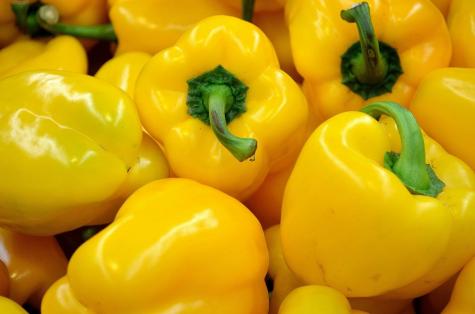 Peppers cost differently. In winter, the price varies from 3 to 5 leva (1.5 – 2.5 euros) per kilogram and depends on the variety and colour. As a rule, red ones are more expensive than green ones. On sale there are fruits grown in Bulgaria and Greece. Both are distinguished by a bright taste and are suitable for salads and main courses.
The price of a kilogram of hot peppers is about 5 leva (2.5 euros).
In summer and early autumn, prices are much lower. Sweet varieties can be bought for 2–3 leva (1–1.5 euros). Green Kapiya at producers' kiosks costs from 1.6 leva (80 eurocents). Hot Ribka is not often found and costs about 4 leva (2 euros). The price of cheaper and more popular varieties is about 3 leva.
Everyone has already forgotten that pepper reached Bulgaria from other countries. For local residents and tourists, it has become an integral part of their daily diet. The useful fruits are eaten at any time of the year in the form of salads and appetisers. They are used in new, unusual recipes. Try Bulgarian pepper, and you will be amazed at how varied your table will become.
Subscribe to real estate market news
Get weekly analytics and current offers.