Life in Bulgaria. Holidays in Bulgaria: description and traditions

21 Dec 2020

 Bulgarians are very distinctive; they love and honour the traditions of their people. Despite the long years of Ottoman rule, Bulgarians preserved their national identity, and this is especially evident in the way they celebrate their holidays.
With the arrival of winter, the first snowflakes and the frosty air invariably carry the aroma of the approaching holidays. Who doesn’t look forward to Christmas and the New Year!
For centuries these days have been the dearest, most pleasant and most cheerful: lavish feasts, family gatherings, a good mood and countless wishes of luck and prosperity. Before every holiday the whole family would come together in anticipation of the fun and prepare for the upcoming celebrations.
Today we will talk with you about Bulgarian folk holidays, find out when Christmas is celebrated in Bulgaria and which holidays and official days off there are in Bulgaria in 2021.
Holidays in Bulgaria in December. On what date is Christmas celebrated in Bulgaria
Winter holidays in Bulgaria and their customs are full of divinations, predictions and rituals whose purpose is to influence the future.
Saint Nicholas Day (6 December) is dedicated to Saint Nicholas the Wonderworker of Myra, who is revered as the deliverer of captives and the patron of sailors, travellers, merchants and bankers. Traditionally, the festive table features fish dishes, most often carp stuffed with walnuts.
Christmas, Bulgarian Koleda, one of the greatest Christian holidays, is celebrated in Bulgaria on 25 December. Christians celebrate the birth of the Son of God, Jesus Christ.
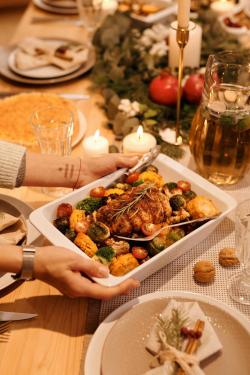
The evening from 24 to 25 December is called “Bădni vecher”. Families gather together. The oldest man in the house places an oak or pear log in the fireplace – the „bădnik“, which must burn all night long. If the flame is bright, the year will be a lucky one.
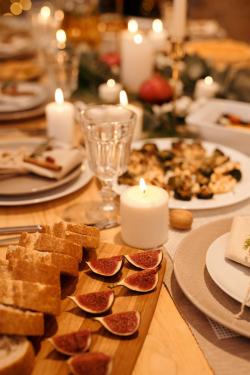
The festive table must have an odd number of Lenten dishes. The meal consists of everything the Earth has produced during the year: walnuts, wheat, beans, dried fruits.
A special place is reserved for the festive pie and the wine, which symbolise the body and blood of Jesus.
The greatest attention is paid to the traditional bread – the „bogovitsa“. Skilful housewives decorate the bread with dough figures: little ears of grain, suns, bees and so on. A silver coin is placed inside the bread for good luck. Whoever finds the slice with the coin will be blessed with happiness in the coming year. Traditional banitsas and pitas are also served at the table.
On Christmas Eve nobody goes to bed; everyone waits for the dear guests: the koledari (carollers). Young people and children go from house to house, bringing a cheerful festive mood and singing traditional songs wishing luck and happiness in the year to come. In turn, the hosts reward them with traditional twisted breads, food and copper coins.
New Year (31 December) is the holiday that marks the end of the current calendar year and the beginning of the next. It is celebrated in countries that use the Gregorian calendar. As everywhere in the world, in Bulgaria the New Year is welcomed cheerfully and with a feast.





Holidays in Bulgaria in January
 Vasilyovden or Surva (1 January) is a Bulgarian national holiday marking the beginning of the new calendar year.
The main custom observed in Bulgaria for the New Year is «survakane».
The custom consists of a ritual round on the first day of the year by a group of «survakari» across a defined territory (neighbourhood, village). “Survakari” are usually boys aged 4-12 or unmarried men. They enter the houses and gently tap the backs of the hosts and the livestock with “survaknitsas” (small branches decorated with red threads, ring-shaped biscuits, coins and small bells), singing and reciting quatrains of blessing. In gratitude, the hosts give the survakari food and money.
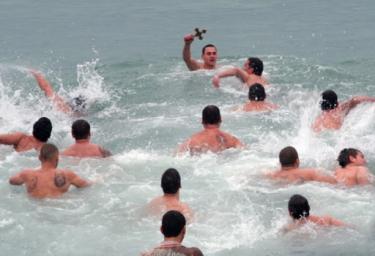
Yordanovden (6 January). On this day, wherever there is a body of water, the local church performs the ritual throwing of the cross. After the cross has been retrieved, a solemn liturgy is held, called the Great Blessing. 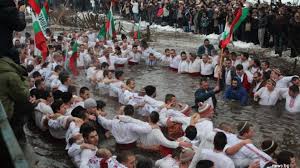 Through it, the holy water in the churches is renewed. The consecrated water is brought home; it protects against illness and cleanses the soul. It is used throughout the year in difficult moments in the family, if someone is ill.
Saint Ivan’s Day (7 January). According to popular belief, Saint John is the patron of godfatherhood and brotherhood. The rite is performed everywhere for newlyweds, since the ceremony is carried out by the godfather or the brother-in-law.
Babinden (8 January) is one of the great national women’s holidays, dedicated to the “grandmothers” – the midwives who help with childbirth – as well as to young brides and women who have given birth. The rituals of this day are connected with the wish to pay tribute to the elderly women who were «delivered» by the babas.
Holidays in Bulgaria in February
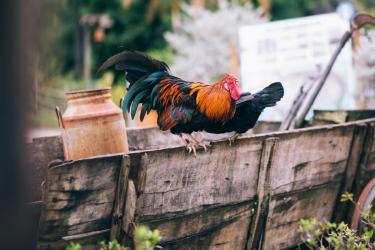 Petlyovden (2 February). It is recognised as a male holiday intended to stimulate the fertility of boys. It is connected with the ritual slaughter of a rooster, which is most often carried out on the threshold.
Trifonovden (14 February). Trifon Zarezan (or Vine-Grower’s Day) is a Bulgarian national holiday in honour of Saint Trifon. It is celebrated by vine-growers, falconers, gardeners and pub owners. It is a labour custom connected with the first agricultural process in the yearly cycle of vine cultivation – its spring pruning.
Holidays in Bulgaria in spring
Spring customs and rituals are meant to ensure favourable weather for the sowing and a good harvest.
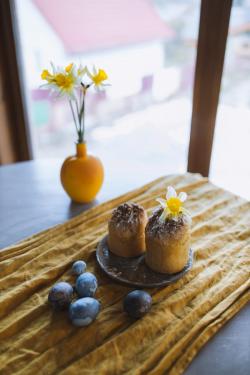 Spring holidays also include customs and rituals connected with the veneration of ancestors. The belief that the dead can help the living if they are given protection is expressed in the funeral rites performed before the Feast of Tabernacles, on Todor’s Saturday, on Saint Lazarus’ Day, on Palm Sunday and at Easter (Velikden).
Baba Marta (1 March). In the folk calendar Baba Marta is a very venerated and emotional Bulgarian custom.
On 1 March every Bulgarian wears a martenitsa on the lapel, wrist or neck. It is a symbol of health, longevity, fertility and abundance. It is made from a twisted cotton or woollen thread. The main colours are white and red. 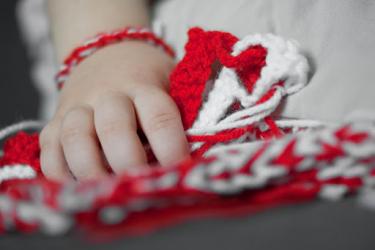 White is a symbol of purity, innocence and joy. Martenitsas were believed to have a magical power to protect from «evil», especially from illnesses and the evil eye. They are taken off only when one sees the first stork. The martenitsa should then be hung on a blossoming or green tree.
Sirni Zagovezni in 2021 falls on 14 March – it is a holiday that does not have a fixed date and falls each year 7 weeks before Easter. The holiday is also called Pokladi and Proshtene (Forgiveness). On Cheesefare Sunday the young ask forgiveness of the elders, children of their parents, newlyweds of their godparents – kissing their hand and saying: «Forgive me …, little one, father». «May God forgive, may you be forgiven!» is the obligatory response. The table is set with ham, halva, cheese and boiled eggs.
The custom of masquerading at Zagovezni goes back to the Middle Ages and even long before, and in our country it is preserved only in certain places. The masks are supposed to drive away the evil spirits wandering among people; the carnival symbolises the victory of light over darkness, that is, the arrival of spring and the end of winter. It is an occasion to hold a domestic carnival, an occasion for merriment and a shared meal.
Bulgaria’s Independence Day (3 March). To understand the idealism of the Liberation, it is enough to read the words of eyewitnesses:
«The people themselves went to war under the leadership of the Tsar. When the Tsar’s word was heard, the people flooded into the churches all across Russia. As the imperial manifesto was read, the people crossed themselves, and everyone congratulated one another on the war», Dostoevsky wrote in 1877 in his famous «Diary».
«The Bulgarians met our soldiers with delight, with tears in their eyes. Little children threw themselves round their necks. What a country, what nature! Grapes, peaches, almonds, walnuts. What abundance. One could make an earthly paradise here, and what is going on now! …», wrote the Russian writer and hero of the war of liberation for us, Vsevolod Garshin, in one of his letters home.
International Women’s Day (8 March).
Lazarus’ Day in 2021 falls on 24 April (Saturday). Lazarus’ Day is a Christian holiday named after Saint Lazarus – a symbol of health and longevity.
The next day is Palm Sunday – 25 April 2021, and Easter (Velikden) is a week later – 2 May 2021.
It is also worth mentioning the holidays in Bulgaria in May:
Saint George’s Day – 6 May, is perhaps one of the most important Bulgarian holidays. The name George is the most common male name in Bulgaria, ahead even of the name Ivan. The holiday marks the coming of summer and is associated with the new economic year – and so this day is filled with many customs connected with agriculture, livestock breeding and health.
Another very significant holiday in Bulgaria is celebrated on 6 September – the Unification of the Principality of Bulgaria and Eastern Rumelia.
 Official holidays for 2021 in Bulgaria:
- New Year – 1 January
- Liberation of Bulgaria – 3 March.
- Labour Day – 1 May
- Easter – 2 May 2021
- Saint George’s Day – 6 May
- Day of Slavonic Education and Literature – 24 May
- Unification of Bulgaria – 6 September
- Bulgaria’s Independence – 22 September
- Christmas – 24, 25 and 26 December
Calendar for 2021 with working days and days off:
In the 2021 calendar year the number of working days will be 249, or precisely 1992 working hours at the standard weekly employment of 40 hours (5 days of 8 hours).
The busiest months are March, June, July, August and November with 22 working days each, and the freest is May with 14 days off.
The Bulgaria Avenue company is always with you; we look forward to welcoming you in 2021 in our sunny and hospitable country!
Subscribe to real estate market news
Get weekly analytics and current offers.