Tips for travellers: what you can and cannot do in Bulgaria. Peculiarities of the language and culture of Bulgarians
07 Feb 2021
Bulgaria has its own customs and laws. In many ways they are similar to European ones, but sometimes they differ so much that it is impossible to logically explain and understand them. There is something unusual in speech, behaviour and habits. And so, to avoid getting into an awkward situation, Bulgaria Avenue offers a short overview of what you can and cannot do in Bulgaria, of things that are out of the ordinary and that you will not see back home.
Beaches
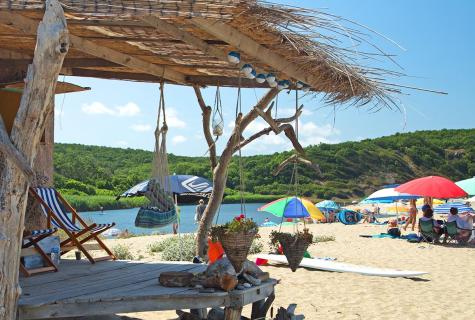 In Bulgaria the beaches belong to the state. Therefore, if you book a hotel on the first line from the sea, this means that between the hotel and the beach there will most likely be a path. Building hotels directly on the beach is prohibited.
For the safety and convenience of holidaymakers, flags of different colours are used on Bulgarian beaches.
The flags are usually hoisted on the lifeguard towers.
A green flag means that the sea is calm and you can swim.
A yellow flag warns of moderate waves.
If a red flag is flying over the tower, swimming in the sea is forbidden.
You can read more about the beaches of Bulgaria in our articles:
Beaches of Bulgaria awarded the “Blue Flag” in 2020,
Beaches in Bulgaria, what you need to know about paying for equipment and in general.
Communication
Why do Bulgarians shake their heads when they agree?
As a sign of agreement, Bulgarians shake their heads from side to side, exactly the same way we do when we disagree with something. And if they want to say “no”, they nod their head and click their tongue.
You need to speak correctly
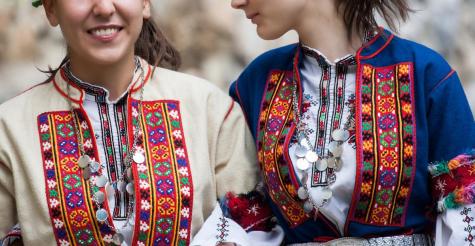 There is a myth that the Bulgarian language is almost the same as Russian and that it is easy to understand and learn. This statement is about 30 percent true, even if the words differ slightly from the familiar sound. For example, when you hear the words avtobus (bus), meso (meat), trenirovka (training), apteka (pharmacy), tantsy (dances), stress, it is not difficult to work out their meaning.
But confidence in a deep similarity of the two languages can play a nasty trick on you. Here are a few examples:
- Getting into a taxi, you are sure that you need to turn right, and you tell the driver so. However, despite your clear instructions, he drives straight ahead. The thing is, “napravo” in Bulgarian means “straight ahead”, and to turn to the right there is the word “nadyasno”.
- You are walking down the street and see the word “bulka” on a sign. Your appetite immediately awakens, and you imagine a bun sprinkled with sugar or a delicate cinnamon roll. However, you will not be able to satisfy your hunger – “bulka” in Bulgarian means “bride”.
- Have you decided to buy a stylish “mayka” (T-shirt) in a shop? You will not be understood if you say this word when addressing a shop assistant. In Bulgaria it means “mother”, not an item of clothing.
- There used to be a restaurant in the centre of Burgas called “Lyuti chushki”. Out of ignorance, people were amused by what angry pigs could possibly be doing in the city. It turned out that “lyuti chushki” means “hot peppers”.
What is also interesting in communication is that Bulgarians love shortened names and use them often. If someone has been introduced to you, try to tactfully find out their full name so as not to get into trouble later. Perhaps Achko is actually Angel, Tyana is Stoyan, and Nasko is Atanas. You can read more about the peculiarities of the Bulgarian language in our article The Bulgarian language and its subtleties.
 No need to rush!
Bulgarians do not like to hurry. And this rule applies to practically all spheres of life. Bulgarians do not get indignant when standing in a traffic jam or in a queue at the shop till. A Bulgarian working day often begins with coffee and a chat, and only after that with dealing with pressing matters. Do not be surprised if it takes a long time for your order to be brought in a cafe, and if at 9.00 nobody in the office picks up the phone. But this approach to life also has its advantages. Despite lower earnings compared with other Europeans, Bulgarians know how to enjoy simple things and feel happy.
Shopping
In Bulgaria people are not particularly fond of haggling. The country is not a rich one, and prices for food, clothing and souvenirs are already quite reasonable. Foreign tourists are considered to be well-off people here. Therefore, a desire to knock the price down by a couple of leva will be perceived here rather as pettiness. At the same time, when buying very expensive leather or fur items in the numerous shops in Sunny Beach, it does still make sense to haggle a little.
Read also: Shops in Bulgaria and what you need to bear in mind
Food
Let us move from the nuances of communication to food. The line is a very fine one, as Bulgarians spend quite a lot of time at the table. They even have a tradition of gathering together with classmates, colleagues and sports friends once a week or once a month to have breakfast, drink coffee or something stronger.
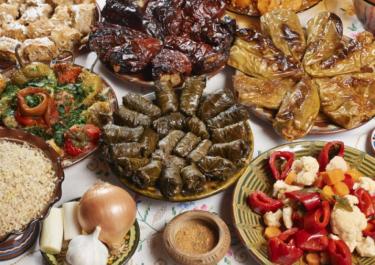 Is it true that Bulgarians eat jellied meat hot?
There is such a Bulgarian dish called pacha. First it is cooked like jellied meat, which gradually sets. Then it is reheated and eaten as a soup. Pieces of bread (not croutons) are added into it.
Peppers everywhere
We do not have exact figures for how many kilograms of pepper each Bulgarian eats a year, but peppers are undoubtedly one of the most favourite products.
Peppers are added to salads and soups, they are stuffed, marinated, sauces and appetisers are made from them, and they are simply eaten raw.
What are they picking in the parks?
From the end of April to the beginning of June, in parks and in fields, you can see people walking around and picking something into bags. It is simple – they are collecting snails, which they then cook. The cooking process is as follows: the snails are thrown into cold water, brought to the boil, taken out, the shells are removed (the intestines remain inside them) and they continue to be cooked until done.
Attention – by the middle of June the snails become poisonous, as they feed on mushrooms and grass by which a person can be poisoned.
Bulgarians also collect horse chestnuts, from which they make tinctures for treating joints.
From life
 Most Bulgarians love their country very much, despite the fact that they scold the government and are nostalgic about how good things used to be. Their eyes light up with joy when someone recalls how strong their state was before the Ottoman yoke.
Bulgarians themselves love animals and love travelling around their country. And here are two unusual examples that may leave you at a loss.
Oh, those cats!
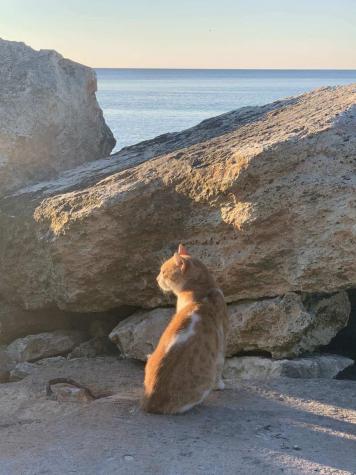
In many Bulgarian cities, for example in Burgas, there are huge numbers of stray cats, and most residents feed them. Newcomers also very quickly adapt, buying dry food and taking it with them on walks.
But feeding stray animals in the cities is prohibited! The law provides for a fine for this, starting at 50 leva. There are several precedents when fines on paper have become real. However, in most cases they have not been paid – people are convinced that in this way they are taking care of the animals. And the court sides with them when, as proof of the legality of their actions, lawyers refer to the law on the protection of animals.
And so kind-hearted Bulgarians continue to feed the cats, putting plates and bedding for pregnant cats and kittens outside. For many, feeding has turned into a real ritual – grandmothers walk several kilometres along the beaches to feed all the stray cats living there.
Dancing at the railway station
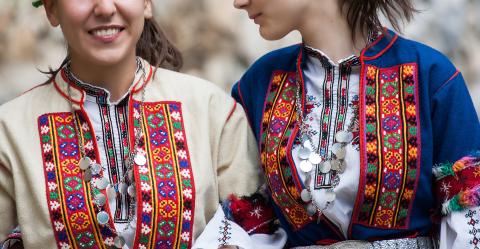
Travelling around Bulgaria, you will notice one strange feature – a group of people gets into a round dance and starts to dance. They may put on music, but in some cases they dance in silence or to the clapping of those around them, hearing and feeling some rhythm of their own. They dance, or, as they say in Bulgaria, play, horo – the national dance. The dancers stand in a round dance, take each other by the hand and, taking a few steps forward and one step back, slowly move in a circle. Depending on the region, there are several kinds of horo.
You can see the dance at festivals, at concerts, in the streets and at railway stations. It does not matter whether it is a small village or a large city.
You can also join in – a few minutes and, we assure you, you will feel an extraordinary energy and strength. It is believed that in the dance a person feels an extraordinary closeness with other people, is freed from stress and anxiety, and starts to smile. Scientists are even conducting studies on what kind of therapeutic help each type of horo provides.
When you are in Bulgaria, be sure to find out what you can do and what you cannot, and what unusual traditions and habits are associated with. Bulgaria Avenue will select for you not only the home of your dreams, but will also make sure that you feel comfortable in Bulgaria.
Subscribe to real estate market news
Get weekly analytics and current offers.