How much does life in Bulgaria cost: current prices for goods and services
14 Oct 2020
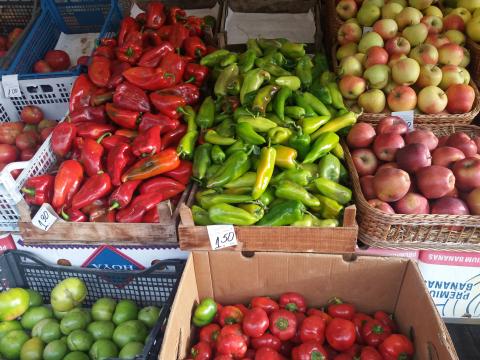
How much does life in Bulgaria cost, is it worth relocating, and will a pension or income from renting out your home back in your country be enough to live comfortably here? These and other financial questions concern those who have bought property in Bulgaria for permanent residence, as well as those who dream of moving to this Balkan country.
Housing costs
 Renting or buying a home is the largest source of expenditure for most people living in Bulgaria.
For the calculations below, we will assume the minimum needs of a family of four, consisting of two adults and two children. For comfortable permanent living in Bulgaria, a family with two children requires a three-room apartment. The average rent in Burgas and Varna is 250-350 euros. In Nessebar, Sveti Vlas, Ravda and Balchik rental payments will be around 200 euros.
Payment for electricity, water and heating (if any) is around €80 per month. In winter these costs go up. Note that electricity tariffs are lower at night.
Owners of apartments and houses in residential complexes sometimes ask tenants to pay a maintenance fee. The monthly payment can be €50. For property in a regular apartment building, the costs will be 6-15 euros.
In total, expenses for a rented home will be around €330-436. When renting a cottage or townhouse, this figure will roughly double.
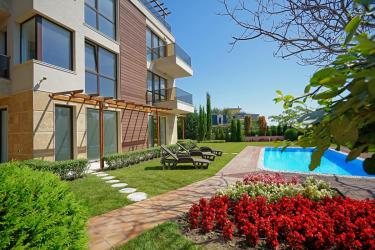 A more economical option may be offered to pensioners:
Rent of a small two-room apartment – €150. If you are lucky, in resort towns you can find cheap options with a sea view starting from €100. Utility bills – €40. Many pensioners are very economical with water and electricity and sometimes pay no more than €30 even in winter. The maintenance fee is from €6 to €30. In total, the minimum expenses come to €136.
When buying a property, the monthly payments for a family with children will be €86-136, and for pensioners €36-70.
The price of an apartment when buying depends on many factors: location, view from the window, floor, and the availability of infrastructure in the complex or building.
The Bulgaria Avenue real estate agency will offer you the best options for buying and renting property in Bulgaria. Our database includes studios, apartments with various numbers of bedrooms, houses and townhouses. Get in touch – we will select liquid property at a good price!
Food, household items, services
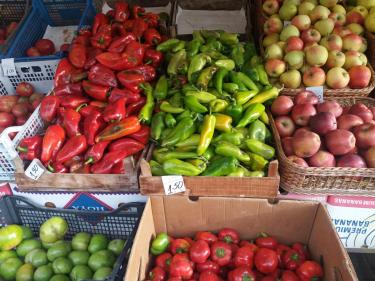 The next expense category is food, services and household chemicals.
Most Bulgarians buy groceries in international supermarket chains (Lidl, Billa, Kaufland, Metro). The quality of products there is good. In addition, there are constant discounts on various types of goods.
There are also local shop chains such as “Bolero”, “Perla”, etc. For those who miss familiar Russian and Ukrainian products, there are shops in the "Beryozka" chain. Small businesses are also very well developed – small greengrocers (zelenchukovi), dairy shops and butchers (mesarnitsi). There are also farmers’ markets.
A snapshot of average prices for food, personal hygiene products and household chemicals in autumn 2020:
- Bread – €0.8;
- Rice (kg) – €1.3;
- Potatoes (kg) – €0.5;
- Chicken fillet (kg) – €6;
- Pork (kg) – €4;
- Cheese (kg) – €10.
- Chicken eggs – €1-2.
- Shampoo – from €2;
- Cleaning products, washing powder – from €3;
- The price of vegetables and fruit depends on the season.
 Prices for services:
- manicure with coating – 10-25 euros, pedicure 15-30 euros;
- women’s haircut – from 13 euros, men’s from 4 euros;
The average monthly expenses for a family of four will be at least €350. Pensioners will need a minimum of €150.
This does not include trips to restaurants, cafes and bars. By the way, Bulgarians are great fans of street food, and there is a lot of inexpensive fast-food here. A slice of pizza, a banitsa or a hot dog can be bought for 1 euro. A 0.5 l bottle of ayran or a cup of coffee with milk costs 0.5-1 euro. Popular restaurant chains include Happy and Kish.
The bill per person in a restaurant is about 30 euros.
A ticket at the Cinema City cinema chain costs 6-10 euros.
Car expenses and public transport
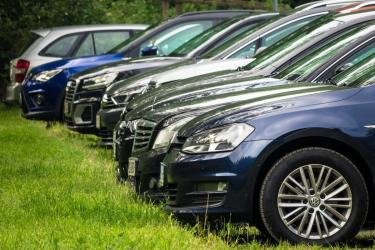 Another significant expense item is the car. In Bulgaria, you can buy a used car in good condition starting from 2,000 euros. Given such low prices for second-hand cars, many people can afford to buy a car in Bulgaria. If you have bought and use a car, be prepared for the following costs (calculated per month for a 10-year-old car with a 100 hp engine):
- Tax – €4;
- Insurance – €12;
- Payment for using out-of-town roads – €4;
- Fuel – €50;
- Maintenance – €7.
Total – €77.
If the family does not have a car, using public transport 10 times by 4 people will cost €30 (a bus ticket – €0.75). Taxi rates are 0.5 euro/km and 1 euro is the starting fare.
Clothing and footwear
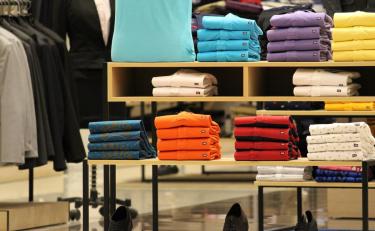 Even with a very economical approach, these expenses cannot be avoided.
A snapshot of average prices:
- Trainers (Bulgarians are very keen on the Decathlon, Deichmann and Sportmaster shop chains) – €20-50; shoes from €30;
- Trousers or a dress (in budget shops such as LC Waikiki, NewYorker, H&M) from €15; a tracksuit – from €30; a jacket – €30; underwear and socks – from €3.
People who have moved to Bulgaria on a residence permit or permanent residence quickly adapt to the possibility of buying goods on discount, so these figures may decrease.
Kindergarten, school, university
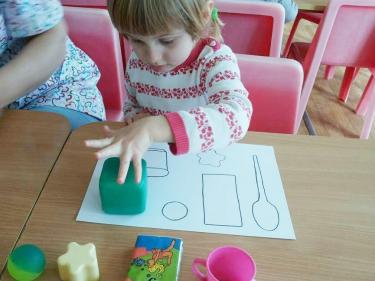 State nurseries and kindergartens cost about 20 euros per month, private kindergartens 200-300 euros. Schooling is free. But there are expenses that cannot be avoided. The figures below are averages.
- Meals. Feeding a child at school will cost at least €2 per day. There is an online pre-ordering system for meals. You can choose from 6-7 options;
- Exercise books – €30/year;
- Textbooks for pupils in grades 8-12. You can use new textbooks or buy them “second-hand”. In Bulgaria there are so-called borsi where you can sell or buy used textbooks. A set on average will cost €75/year;
- Stationery – €50/year;
- Uniform, tracksuit – €100. School uniform is not required in all schools, but is mandatory for pupils in grades 8-12;
- Additional fees for celebrations and excursions – from €30.
In total, per month per child – €24, for two children – €48.
University tuition costs are hard to predict. Annual tuition at a university for Bulgarian citizens and holders of permanent residence is about €600. For students with residence permit status – €1,200.
Hobbies, entertainment, courses
 It is impossible to come to Bulgaria and constantly sit at home in a house or apartment. For many, the ability to meet friends, drink coffee and try a new menu in a favourite restaurant becomes vitally important.
Others want to get additional education, improve their skills, take language courses, start doing yoga, Pilates or dance, or go hiking.
These costs are very individual and range from 20 to 50 euros per person.
So, on average, the total monthly expenses for food, education, entertainment and accommodation in Bulgaria are as follows:
For a family of four – €639-1,133;
For 2 pensioners – €428-856.
The figures given are averages. Actual expenses depend on the people, their interests, habits and way of life.
Bulgaria Avenue specialists will answer all your questions related to relocating to Bulgaria, buying property, obtaining a residence permit or permanent residence, employment, etc. Get in touch – we work for you!
Subscribe to real estate market news
Get weekly analytics and current offers.